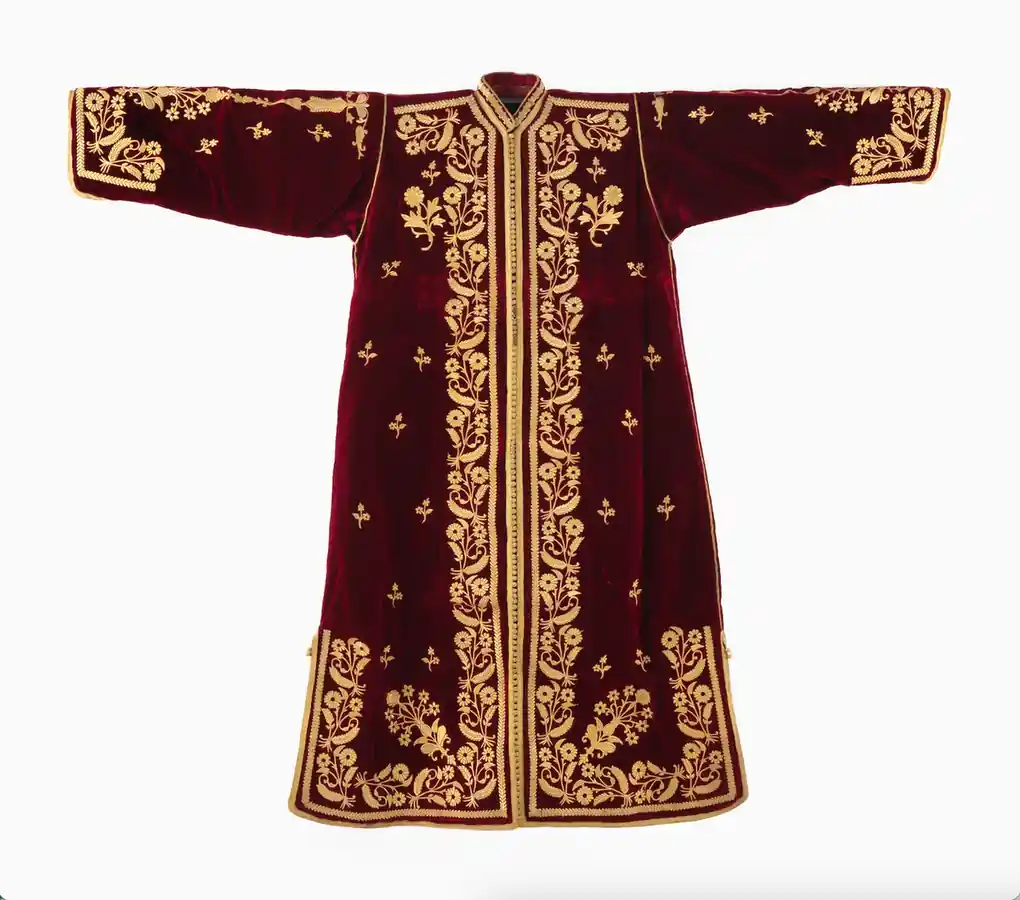
A kaftan laid flat, sleeves outstretchedpage one
Kaftans
Kaftans for warm days, in linen or crepe
A wide body, a shallow V at the neck and a hem that stops just above the ankle. The same pattern is cut in two cloths, and each behaves differently in the heat.
Linen against crepe
The linen kaftan is cut from a pre-washed, mid-weight linen. It is the cooler of the two: linen lets air through and dries quickly, so it is what we reach for on a July afternoon or on holiday. It creases, as linen always does, but the creases are soft because the cloth has already been washed and tumbled before cutting. The colour softens a little over the first few washes.
The crepe kaftan is cut from a lighter cousin of our abaya crepe. It has more movement than the linen and almost no creasing, so it travels better and looks sharper at a family gathering. It is a touch warmer than linen in full sun, but it does not stick to the skin.
Both pull on over the head. The linen kaftan has two side slits that open to the knee for walking; the crepe kaftan has a self-fabric tie at the back of the waist that can draw it in or be left loose.
Linen kaftan — £58 · Crepe kaftan — £62
page two
Wearing it
Warm-weather wear
A kaftan works because it stands away from the body. Air moves underneath it, the sleeve is wide enough to stay off the forearm, and nothing presses at the waist unless you want it to. That is why both versions are cut generously across the chest and shoulder: the fit is in the length, not the width.
In hot weather, the linen kaftan can be worn on its own over a light slip. The crepe kaftan, being smoother, sits well over wide trousers in the same colour for a long, unbroken line.
Layering
When the evening turns cooler, either kaftan layers under an open abaya. The kaftan's shallow neck sits inside the abaya's front edges and its hem is cut a little shorter, so the two do not bunch together at the ankle. The plum crepe kaftan under a black open abaya is the pairing we are asked about most.
A jersey wrap scarf in a neutral ties the layers together; the scarves page describes how each one sits.
Colours
Linen kaftans come in oat, chalk and rust. Crepe kaftans come in plum, black and sand. Linen colours are slightly uneven by nature, which is part of the cloth's character rather than a fault.
page three
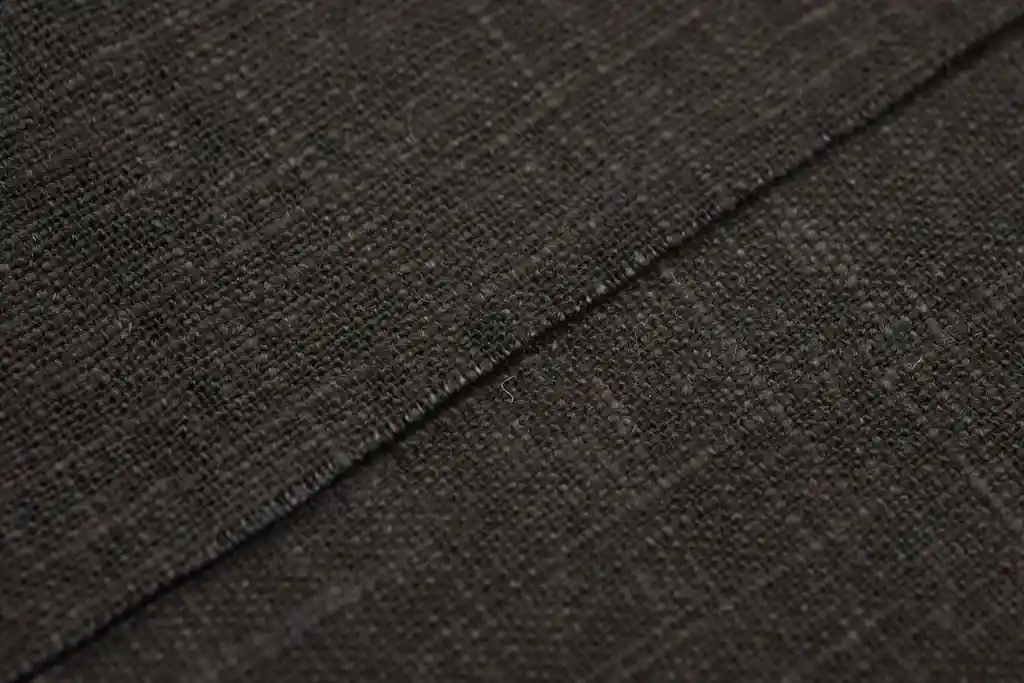
The weave of washed linenpage four
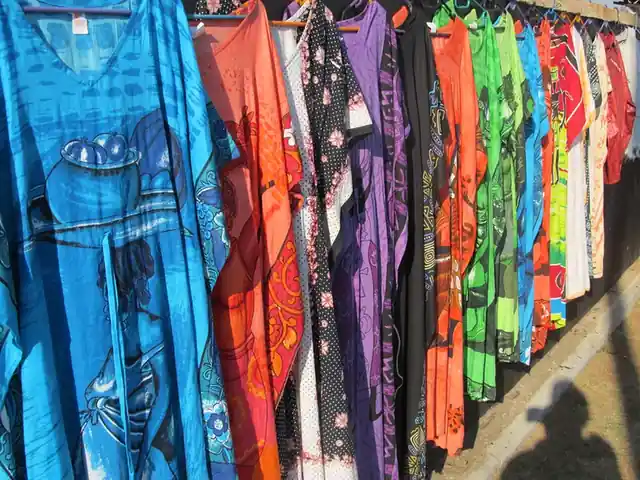
Kaftans hung in a rowpage five
Lengths and prices
Two sizes, each with its own length
Kaftans are measured from the shoulder seam to the hem. Because they are loose, two sizes cover the range comfortably, and each has its own length so the taller size does not end mid-calf.
| Size | Length | Usual dress size | Suits a height of |
|---|---|---|---|
| S/M | 128 cm | UK 8 to 14 | about 150–163 cm |
| L/XL | 134 cm | UK 16 to 22 | about 160–175 cm |
If you sit between sizes, choose by height rather than by dress size: the width is generous in both, the length is what you will notice.
Care
- Linen: wash at 40 degrees, shake out and line dry. Iron damp if you want it crisp; leave it if you like it soft.
- Crepe: wash at 30 degrees, inside out, and hang to dry. A cool iron through a cloth is enough.
- Neither kaftan should go in a tumble dryer; the linen will shorten slightly and the crepe will lose its fall.
Every kaftan is pressed, folded in tissue and posted in a sleeve. Delivery costs are on the delivery page.
page six